

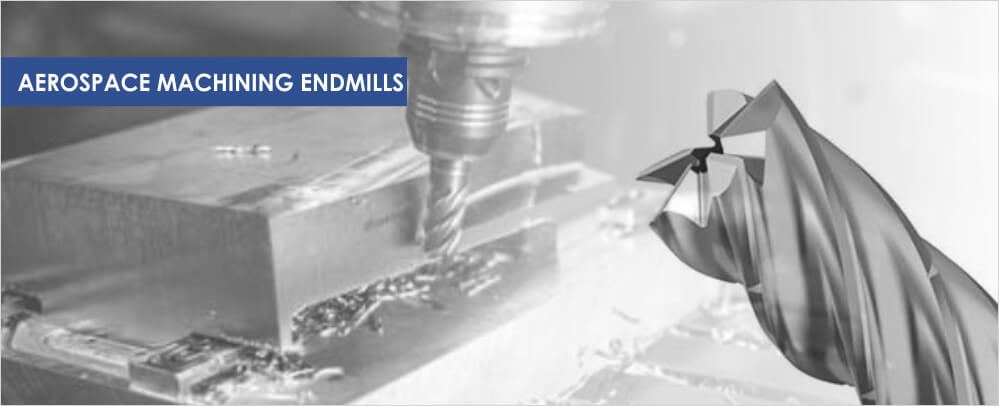
Aerospace Machining Endmills
Overview: For common operations such as shoulder and face milling, the machining of nickel-based materials remains challenging. Although offering excellent performances, these materials exhibit poor machineability due to their low thermal conductivity, potential for adhering to cutting tools and the presence of abrasive particles within the alloy structure.
Due to these issues, productivity with carbide tools tends to be low. In addition, part complexity means that some components demand extended reach, while process flexibility is another factor high on the wish list at many aerospace manufacturers. Here, new ceramic end mill technology has emerged to help meet these requirements, offering the potential to optimise the machining of aero-engine parts and provide significant competitive gain.